
Samye-Chimphu

Written By Paul Baffier
Culture and tradition
In this article, discover Samye-Chimphu, a major centre of Dzogchen in Tibet. Paul explores its history and significance.
Series: The Lineage
Samye-Chimphu (bSam yas mchims phu)
Samye is the very first Buddhist monastery in Tibet, and Chimphu (pronounced: Tchimpu) is its retreat site, a half-day’s walk away.
There’s just too much to say about Samye-Chimphu.
Almost impossible.
“Samye-Chimphu is thus one of the eight power places of Tibet and Bhutan consecrated by the Lotus-Born and by Yeshe Tsogyal.
There is so much to say!”
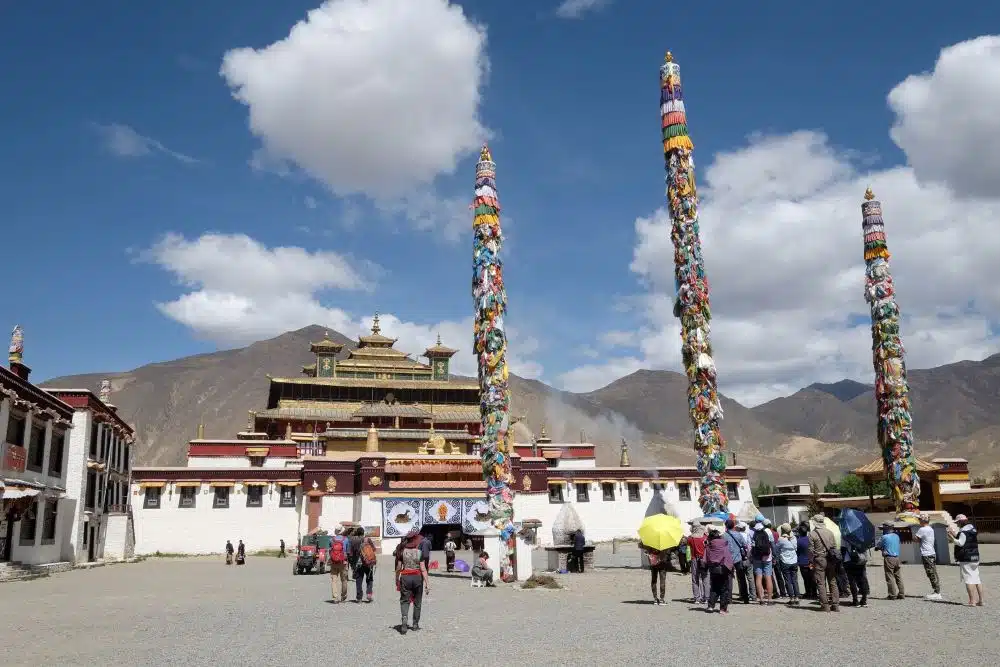
First, Samye is a very specific geomantic site, where Santarakshita anointed Emperor Trisong Detsen’s head with essential earth (sa zhag) in white, red, and yellow—excellent omens of fulfilled wishes and widespread teachings.
Chimphu—it is said that the mountain there, is like a leaping turquoise lion, and the valley is a blooming lotus.
Samye is where a temple complex began to take shape, despite the forces of nature, the serpentine spirits of the waters, and the wrath of the underworld.
Samye is the place deemed impossible to build, which took 52 years (762–814) to complete; the pretext for summoning the Lotus-Born, Padmasambhava of Oddiyana, who had attained sublime realization at Maratika, where Amitabha and Tara had appeared to him to impart all the teachings of the three times.
Chimphu: it is said that Padmasambhava blessed the site by performing a vajra dance there, and that the surrounding wall was built according to the outline of his immense shadow, which had fallen as he danced.
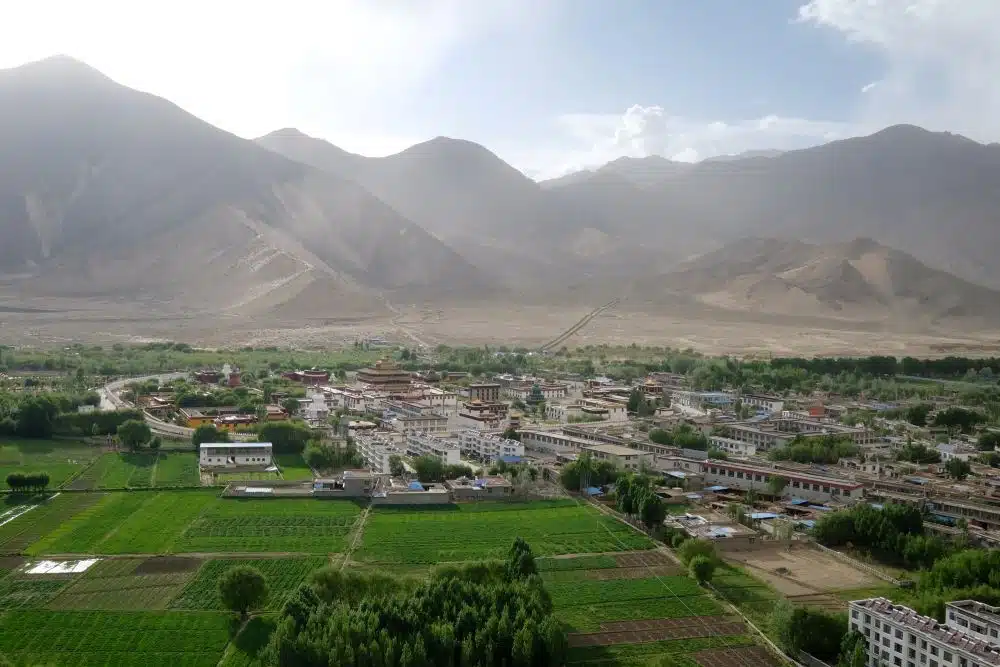
Samye is where the Lotus-Born subdued the earth spirits of Tibet and established a sacred site that radiated the teachings for centuries.
Samye-Chimphu: It is said that the first temple built there was dedicated to Tara, for it was through Tara that Emperor Trisong generated the pure and perfect mind, and through Tara that obstacles were removed.
Samye is the temple where the old man received the Dzogchen instruction on the Pointing of the staff.
Chimphu: Jigme Lingpa says that Emperor Trisong stayed there in retreat and there also where he wrote his treatise on logic; and Khyentse Wangpo says that he had retreat houses built there.
Samye is the place where, once a year, the wooden block had to be replaced—the one that the retinue of the red protective yakṣa Tsi’u-mar would carve into to cut wicked individuals to pieces, the place where he judged the karma of the deceased.
Chimphu is the cave where the flower of the twenty-five disciples fell into the mandala, the cave where Gyalwa Chokyang attained realization, the cave where so many Dzogchen masters came to realize themselves in a continuous stream for over a millennium: Longchenpa, Rangjung Dorje, Jigme Lingpa…
Samye-Chimphu: it is said that the temple statues there were modeled after the emperor’s relatives, the statue of Tara after the beautiful Queen Chokro-sa.
There were so many statues and paintings.
Samye-Chimphu is thus one of the eight power places of Tibet and Bhutan consecrated by the Lotus-Born and by Yeshe Tsogyal.
There is so much to say!
Bibliographical References
- « Chronology, Small chronological compendium of various masters », compiled by Konchok Tendzin (M. Ricard), Shechen Monastery, Nepal
- Tcheuky Sengué, Petite Encyclopédie des Divinités et Symboles du Bouddhisme Tibétain, 2002, Claire Lumière.
- Matthew Akester et mKhyen brtse dbang po, Jamyang Khyentsé Wangpo’s Guide to Central Tibet, Chicago, 2016, Serindia Publications.
- Jigme Lingpa, The Kalaviṅka’s Call: a Guide to Glorious Samye-Chimpu : https://www.lotsawahouse.org/tibetan-masters/jigme-lingpa/kalavinkas-call-samye-chimphu
Nyangral Nyima Öser, L’instruction du pointé de bâton : https://dzogchentoday.org/fr/the-instruction-pointe-baton/
More Posts

Starlight
In "Starlight", Mila Khyentse talks about winter nights, starlight and light of mind. We just have to look up!

The Tibetan Transmission: the Transmission According to the Four Initiations of Vajrayana
The Tibetan transmission, according to the four initiations of Vajrayana, leads to the complete realization of the ultimate nature of all reality.

The ground of all Künshi
This article “The ground of all, Künshi” provide a better understanding of the essential words and concepts of Dzogchen.