
Work as a Basis for Practice
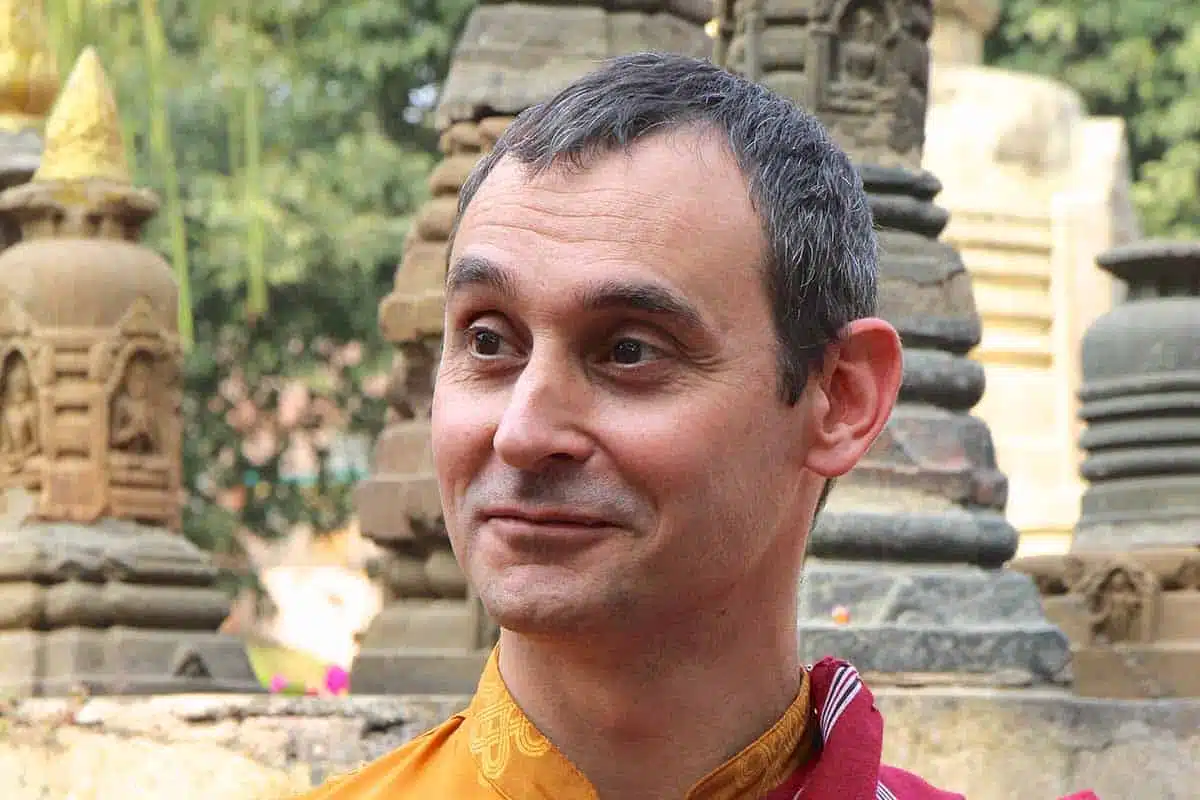
Written By Mila Khyentse
Blog | Dzogchen practice
In “Work as a Basis for Practice”, Mila Khyentse talks about working and practicing Dzogchen at the same time in the same place.
Series: Work and Dzogchen
Work as a Basis for Practice
In the Great Perfection tradition, all situations in life can reveal to us how our mind works and show us who we fundamentally are… if we are truly present in them.
A wonderful playing field and learning ground for this is our job—our professional activity or activities. We spend the vast majority of our time working, whether in person or remotely.
What if the work that allows us to make a living, pay the bills at the end of the month, and perhaps even achieve a certain degree of relative fulfillment in our lives, could also help us attain a more fundamental and far more lasting sense of achievement? This, at any rate, is what Dzogchen proposes, since its main practice focuses on being fully present to who we really are, regardless of what we’re doing or where we are, day and night.
As Khenpo Gangshar writes: “Essentially then, at all times and in all situations, do not contrive with the mind, but allow it to settle naturally; knowing this means you will never be apart from the experience of the dhātu.” [1]
“After all, why limit the possibilities to the meditation cushion when, in a busy life, we have to admit that we don’t spend much time on it compared to all our other activities?”

So what could be better than being present—being fully there—in everything we do professionally? All I need to do is decide to make my professional activity a means of getting to know myself better, of discovering my limits through what I do and overcoming them, and, above all, of encountering what conditions and defines me in one way or another. How often, when we meet someone for the first time, do we highlight our job, our position, or our professional activity? In today’s society, it’s an essential part of what shapes and defines me—even in my own eyes. It’s therefore important to use work as a starting point to see how and to what extent it defines me, and also to use it to discover something else about myself beyond this simple social definition.
I remember a story someone shared with me quite some time ago: a person just beginning the preliminary practices of Dzogchen discovered that it was possible to focus at work—both on the task at hand and on what was happening within oneself, and perhaps even more so… After a few days of practice—focusing whenever she thought of it while at the computer, in meetings, while talking with her boss and coworkers, at the coffee machine, and so on—she noticed a change in the way she behaved and perceived things. The more she remained present to what was happening inside her while also being present in her interactions, the more she was able to step back, and her state of being became increasingly expansive. Until one day, while answering her emails in this state of presence, she read the word “space,” which triggered an “unusual experience”, as she later described it. She was no longer present in the experience of her office in front of her computer, but had entered another form of experiencing reality: an extremely vast, luminous, primordially alive space. Of course, she interpreted this experience as a revelation of the nature of her mind. She was not wrong.
It has since opened up enormous new perspectives for her. She, who—like many—used to drag her feet on her way to work in the morning, found herself becoming increasingly enthusiastic about going back. Not necessarily because of her boss, her company, her colleagues, or the fleeting sense of accomplishment it might provide, but because she now knew she could truly discover herself there as well—not just on her meditation cushion, comfortably settled at home. She discovered that her practice was dynamic, that she could apply it wherever her mind was. There was only one thing she lacked: the enthusiasm needed to embrace everything—whether painful, tiring, or boring, as well as fulfilling—as a revelation of her true nature.
After all, why limit the possibilities to the meditation cushion when, in a busy life, we have to admit that we don’t spend much time on it compared to all our other activities? We just have to realize that it’s possible. Practice, whether outside of the activity or within it, is still practice.
Work as a way to discover our true nature—in addition to being able to pay the bills at the end of the month… that’s not bad, is it?
[1] Khenpo Gangshar Wangpo, “A Way of Settling” (in the sense of simply abiding): https://www.lotsawahouse.org/fr/tibetan-masters/khenpo-gangshar/a-way-of-settling. The dhātu is the primordial nature of our mind—clear-light, natural primordial knowledge. BACK
More Posts

Is Eternal Snow Really Eternal?
In “Is Eternal Snow Really Eternal?”, Damien invites us to reflect on eternity and the Great Perfection.

On The Mountain Trails
Maréva explores the perspectives of the hiker and the shepherd whose experiences oscillate between exertion and contemplation.

Starry Night
In “Starry Night,” Johanne, camping up in the mountains, talks about how skygazing reveals our own primordial nature…