
Verticality Without a Summit

Written By Denis Martin
Blog | The Dzogchen basics | The Dzogchen Journey
In “Verticality Without a Summit” Denis refers to the ascent of a mountain as a metaphor for the different paths of Great Perfection.
Series: Summer in the Mountains
Verticality Without a Summit
For several generations, my family has spent its vacations in a small Alpine village nestled at the foot of a majestic mountain rising to an altitude of over 4,350 meters.
As a child, this mountain held an almost magnetic fascination for me. Its sheer verticality seemed to defy all human possibility. I would spend hours gazing up at its peak, wondering what kind of beings could possibly have the ability to venture there.
The village elders always had a story to tell about climbing this mountain. The tales were passed down during haymaking season, on hot summer days, or in the evenings in front of the alpine chalets. They spoke of mountaineers who had vanished in the fog or been swept away by dizzying falls, and of those who had ventured onto a treacherous ridge before turning back. They also recalled, with deep respect, the names of those who were trusted to lead the way.
Today, there are three main routes for climbing this mountain, depending on the abilities of those who wish to venture there.
“…the experience remains that of a mountaineer gazing up at the snow-capped peak from the valley, convinced that the Great Perfection lies in that place he has not yet reached”.
The north face is the most impressive. It is a massive wall of rock and ice. It is the most direct route, also known as the steep route, reserved for the most experienced mountaineers. Listening to some accounts, they seem to ascend it effortlessly, as if they were retracing a familiar path.
The East Ridge, steep with significant elevation changes, offers a fast route provided you have the ability and remain constantly vigilant. The slightest lapse in concentration can cause you to lose your way during the climb.
Finally, the South Ridge, which is more even and better marked, nevertheless requires greater endurance and patience. This is the route taken by most climbing parties.
Regardless of the route taken, such an ascent requires a deep knowledge of the mountain, preparation tailored to one’s own abilities, and, above all, the guidance of an experienced guide.
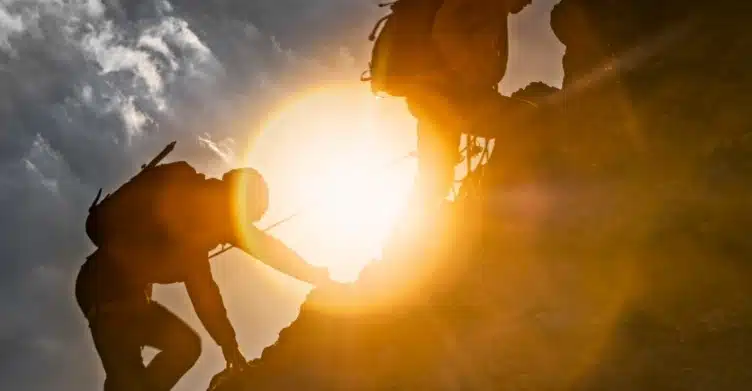
How many, lacking high-mountain experience and inadequately equipped, have found themselves lost in the scorching scree fields, without water or supplies, hours’ walk from the nearest refuge?
In the tradition of the Great Perfection, the teachings also describe several paths ccorresponding to beings’ different capacities, often presented in three categories.
The chikcharwa (Tib. gcig char ba), rare practitioners of great capacity, recognize the primordial nature of their mind in an instant when it is pointed out to them. Once they recognize it, they abide in it effortlessly, like a mountaineer who naturally finds the most direct route to the summit.
The thögalwa (Tib. thod rgal ba), advance in leaps and bounds or through successive breakthroughs rather than along a linear path. Their progress is rapid and sometimes spectacular, though they may also lose this recognition momentarily.
Finally, the rimgyipa (Tib. rim gyis pa), who follow a gradual progression. They require a longer period of preparation and preliminary training. Their path is less spectacular, but it possesses its own stability.
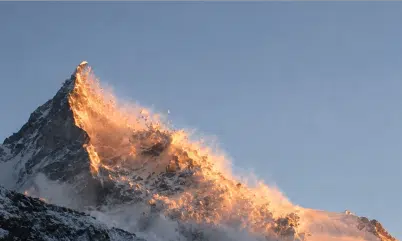
Tradition reminds us, however, that our present abilities do not stem from a choice or a calling, but simply from familiarity accumulated over countless lifetimes. Some arrive already acclimated. Others must still learn to breathe the high-altitude air.
Ultimately, it doesn’t matter which path we take. When we reach the peak, we realize that it is not an achievement but rather the very foundation of our entire reality, the Primordial Evidence (Tib. rig pa).
Yet, for most of us, the experience remains that of a mountaineer gazing up at the snow-capped peak from the valley, convinced that the Great Perfection lies in that place he has not yet reached. We accumulate knowledge and practice as one drives pitons into the rock, hoping that every meter gained will bring us closer to the peak of Primordial Evidence. As long as the nature of clarity and luminosity of the mind is not recognized and does not become part of our experience, we feel as though we must climb multiple peaks.
Thus, regardless of the path we have followed, as soon as clarity and luminosity are consistently recognized within the vision as the very foundation of our true nature, it is then the path of Great Perfection, also called the “motionless path”, that reveals itself to us.
While maintaining his verticality, the practitioner ceases to climb, remaining motionless at the heart of movement. He no longer views the mountain as an external object to be climbed, but recognizes that his mind is the very space in which the mountain appears. There is then no longer a subject seeking to reach a peak called Dzogchen.
Realizing the illusion of the path, the mountain then collapses in on itself, giving way to naked, immediate presence, with no direction to follow and no peak to reach. The Great Perfection.
More Posts

Starlight
In "Starlight", Mila Khyentse talks about winter nights, starlight and light of mind. We just have to look up!

The Tibetan Transmission: the Transmission According to the Four Initiations of Vajrayana
The Tibetan transmission, according to the four initiations of Vajrayana, leads to the complete realization of the ultimate nature of all reality.

The ground of all Künshi
This article “The ground of all, Künshi” provide a better understanding of the essential words and concepts of Dzogchen.