
The Era of Everything and of Nothing
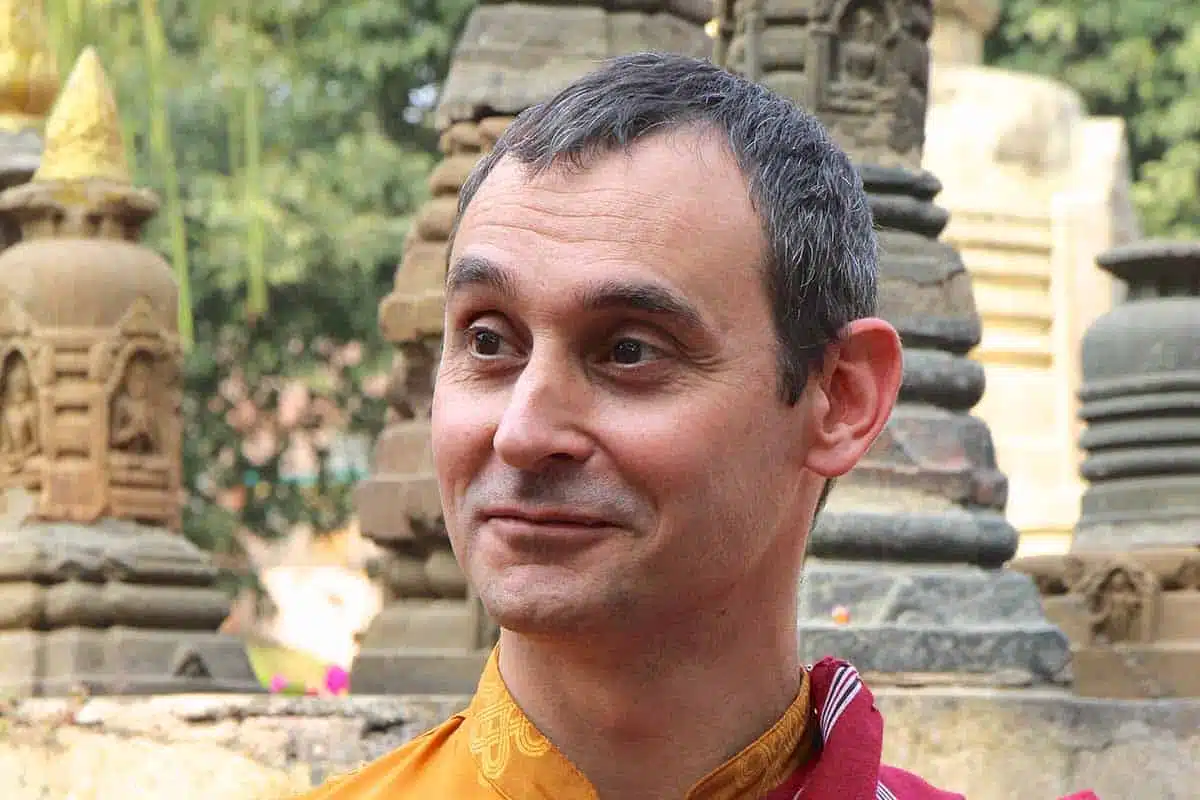
Written By Mila Khyentse
Blog | What about me?
Series: Life Together 2 – First post HERE
The Era of Everything and of Nothing
Extremes. Both in the Buddhist world and in the Dzogchen tradition, we are warned against extreme ways of thinking, positions or views. And yet, it has to be said, we don’t really know what extreme positions or attitudes are these days. Don’t we?
For these traditions, extremes are first and foremost two views, two visions of reality that are not realistic, that cannot in fact be observed or applied in real life. They are therefore totally factitious, the pure product of our conceptualization of phenomena. This is what we call “nihilism”, which, on the scale of extremes, could be placed at the very negative end of existence. It is the 0% of existence: nothing exists! At the other end of the scale, at the 100% level of existence, is “eternalism” (or, to stick with the more modern definition, “existentialism”): everything exists, has always existed, and will always exist! These two extreme views of reality are impossible, really. On the one hand, to think that nothing exists cannot be valid, if only from the point of view of the experiences we have: we think, we act, we live, we interact… So we can’t imagine that nothing exists because we actually experience it. On the other hand, to imagine that everything is eternal and exists absolutely, without undergoing variation, change and ultimately disparition, is equally impossible. All living things, including our own existence, show us that everything is impermanent: there is birth, ever-changing existence, and finally death. Nothing lasts. Everything is constantly changing. As a Buddhist saying goes, “There is only one permanent thing: impermanence”.
“Buddhism and Dzogchen thus warn against a well-known phenomenon: extreme views inevitably lead to extreme attitudes and actions (…)”
What these traditions offer us is the ability to look between the two, between these extremes. To see that, on the one hand, they can “exist” as experiences, and on the other hand, that these same experiences never last indefinitely. A very profound practice instruction in the Great Perfection says, “All phenomena, all experiences are apparent but non-existent.”

It’s the contradictory injunctions of contemporary societies that foster the confusion in which we now find ourselves. Driven simultaneously by the foolish hope, out of fear and ignorance of death, that we will live indefinitely, and by the profound nihilistic defeatism of knowing that everything is falling apart, we no longer know where we stand.
Well, that’s nothing new. The advantage of appealing to the memory of the great traditions of humanity is that they show us that this process was already here when they were born. Whether it was the Buddha in the 6th century B.C. or Garab Dorje in the 2nd century B.C. (?), they were constantly having debates with all kinds of specialists – or with anyone, for that matter, not unlike today! – about existentialism and nihilism.
Extremes of view and behavior are therefore deeply rooted in human beings.
Buddhism and Dzogchen thus warn against a well-known phenomenon: extreme views inevitably lead to extreme attitudes and actions, fed by the confusion of the clash of contradictions between nihilism and eternalism, which share the same space. It’s an explosive cocktail, highly inflammable!
So: “apparent but non-existent”. We need to distance ourselves from what we’re experiencing, and from the extreme way in which we’re apprehending it. This is the advice of Dzogchen.
As Ricky Gervais said in his speech at the 60th Emmy Awards (0.57′): “Don’t cry… It’s pathetic. It’s just an award!”.
More Posts

The Practice of Dzogchen?
There is a lot of talk about practice, but what is it really? Mila Khyentse talks about the basic steps and how one progresses towards the Great Perfection.

Death does not wait for the number of years
In this article Nils asks himself, in the Dzogchen way, about the meaning of death and by consequence of life… while eating a croissant.

The Turtle’s Pace
In the turmoils of life, open our mind to the turtle’s awareness: a slow but mindful pace…