
Samsara

Written By Damien Brohon
Dzogchen Terms | The Dzogchen basics
Damien here defines saṃsāra: due to a lack of proper understanding of reality, this is a state of great agitation that leads nowhere.
Series: The Dzogchen Terms
Samsara
In his oral teachings, Tulku Urgyen Rinpoche [1] used to say: “Saṃsāra is the mind turned outward, lost in its projections. Nirvāṇa is the mind turned inward, recognizing its own nature.” When the mind fails to see its own nature, it is “turned outward”. It fails to recognize that the myriad appearances it experiences are its own projections. It identifies with a fictitious ‘self’ and lives in a fictional universe. This ignorance (Tib. marigpa, literally ‘not seeing’, i.e. not knowing) condemns the mind to cyclical wandering (Skt saṃsāra). It wanders because it is constantly seeking happiness in objects, beings and situations that are devoid of the substantiality that it attributes to them. This wandering can only be cyclical because it continues indefinitely until the nature of reality is recognized. Thus the mind becomes agitated while remaining a prisoner of itself. In summary, saṃsāra, due to a lack of proper understanding of reality, is a state of great agitation that leads nowhere, like a hamster running on a wheel.

[1] A great contemporary Dzogchen master (1920–1996). Many of his teachings have been translated into Western languages, such as Tulku Urgyen Rinpoche, Vajra Heart Revisited: Teachings on the Path of Trekcho, translation by Erik Pema Kunsang and Marcia Binder Schmidt, Rangjung Yeshe Publications, 2020. BACK
More Posts

The Terma Lineages
In this article "The Terma Lineages", Grégoire invites us to discover the termas, their transmission and those who rediscovered them.
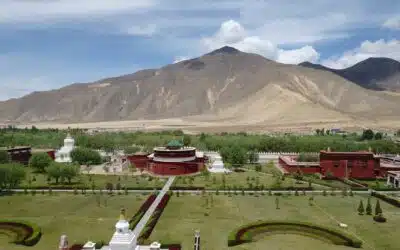
Samye-Chimphu
In this article, discover Samyé-Chimphu, a major centre of Dzogchen in Tibet. Paul explores its history and significance.
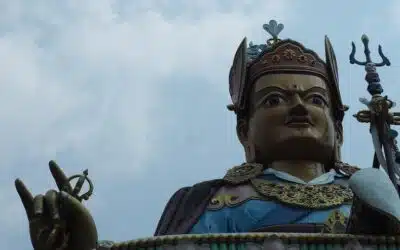
A Living Tradition: The Kama and Terma Lineages
In "A Living Tradition: The Kama and Terma Lineages", Denis introduces the two lineages of transmission central to the Nyingma tradition.