
Is the Marmot a Yogi?

Written By Damien Brohon
Blog | The Dzogchen basics | The Dzogchen Journey
In “Is the Marmot a Yogi?”, Damien outlines a definition of what a yogī might be according to the Dzogchen tradition.
Series: Summer in the Mountains
Is the Marmot a Yogi?
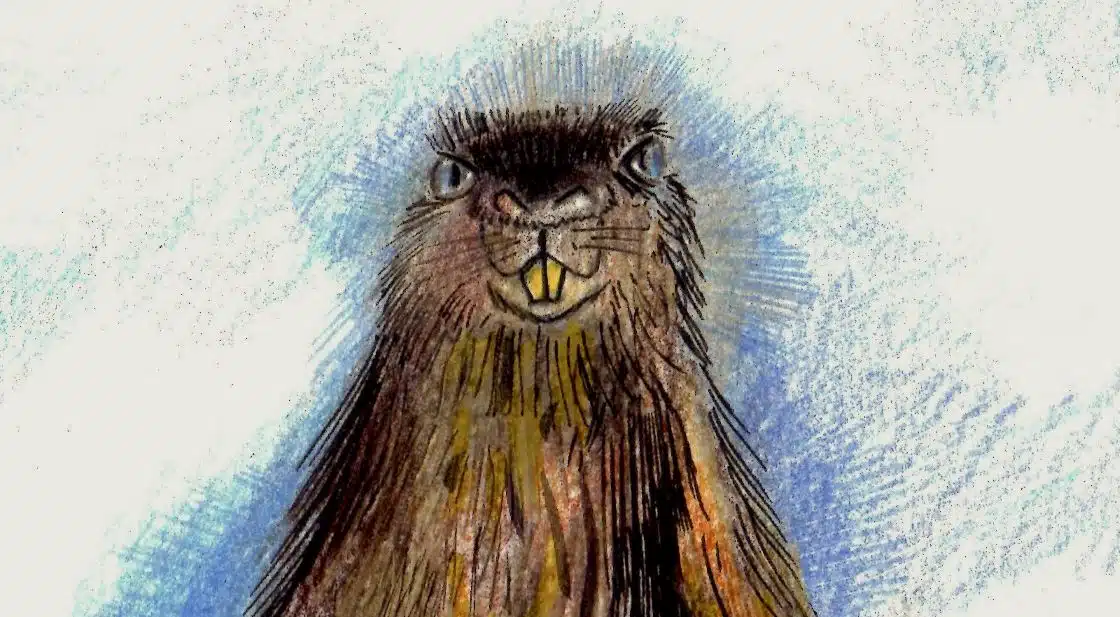
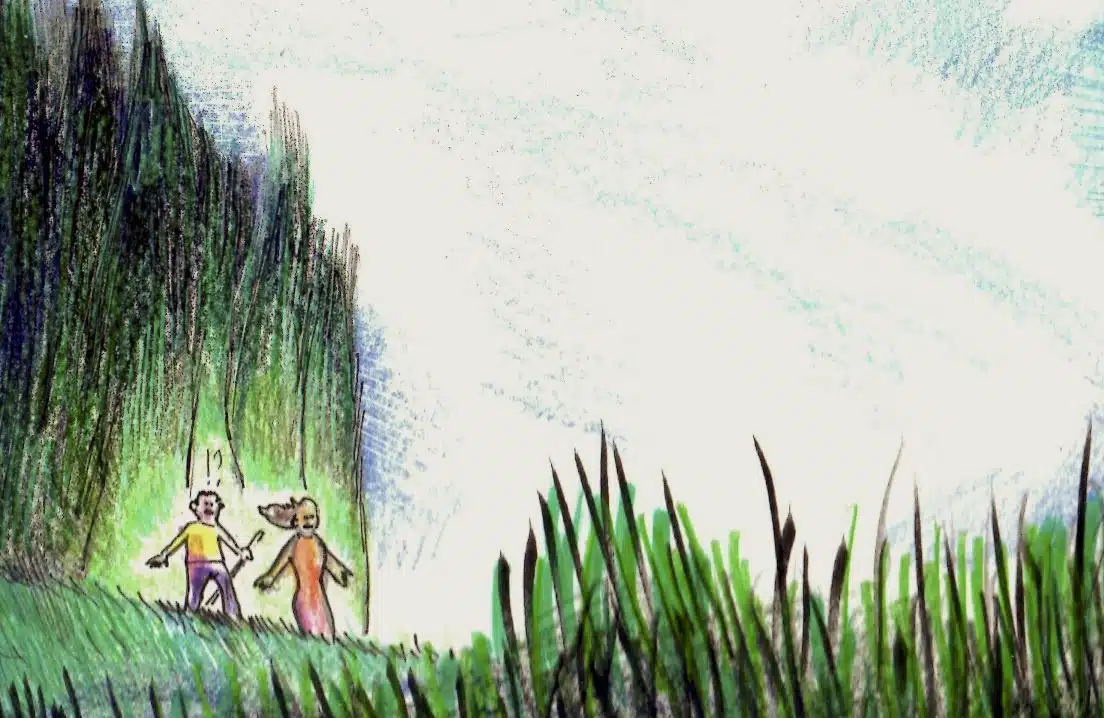
Karima Carambar and Jean-Donald Tambourin are hiking in the Alps. The air is crystal clear, the horizon boundless, and their thoughts are clear. They have already reached a certain altitude when, emerging from a copse of conifers, they come out onto a vast alpine meadow. And there… they see the solemn silhouette of a marmot standing tall. Total stillness! Observation! And a question: Could the marmot be a yogi? Indeed, Karima and Jean-Donald have recently become interested in the Dzogchen tradition (the Great Perfection). They have read texts depicting yogis and yoginis retreating to isolated hermitages – ‘deserts’ in the medieval sense of the term (Tib. dben gnas). These practitioners cultivate a natural ease far removed from social conventions. Seing the beautiful, perfectly still posture of the mountain rodent (Latin: marmota), they cannot help but associate this image with accounts of the yogic life. Indeed, the marmot is unconcerned with the image it projects, does not construct a complex narrative about itself, does not agonize over the meaning of its life, and does not seek to create a “better version of itself”. It remains spontaneously present in its environment and follows its natural rhythms without conflict. Karima and Jean-Donald are young, active, and overworked city dwellers who would really love to possess the same qualities as this high-altitude mammal…
“It is often said that the life of a yogī is the final one in the endless cycle of rebirths – the prelude to total, complete and definitive enlightenment.”
But what exactly is a yogi or a yogini? In Sanskrit, this term refers to someone who practice yoga, that is “union” with the nature of reality. It is about having a direct, firsthand experience of what the teachings of Dzogchen point to. One could know everything about everything, and know it better than anyone else, yet still have an ordinary, confused mind. For the yogīni, it is a matter of seeing and experience ‘body and soul’ what these words signify. The figure of the yogī is often highly evocative for postmodern Westerners. It is this figure that inspires our two hikers to such an extent that they recognize it in a peaceful marmot. Karima and Jean-Donald have no desire to subscribe to any new belief system. Too many words, too many ideas, too many disappointments. On the other hand, they long to discover the truth of their being. For them, this discovery can only take the form of a direct experience. They want that “wow” effect!
But how can we ensure that this is not just another ‘trip’? For there to be a genuine liberation of the mind and a recognition of its radiant nature of emptiness-luminosity, it is essential to truly embrace the attitude of a yogīni. She dedicates her entire existence to enlightenment. It is often said that the life of a yogī is the final one in the endless cycle of rebirths – the prelude to total, complete and definitive enlightenment. Worldly criteria no longer apply at all; only enlightenment matters. This is called the emergence of certainty (Tib. nges ‘byung). As Nyoshul Khen Rinpoche (1932–1999) says in one of his poems:
“ Though I sleep in a lovely mansion of the finest gold,
Overflowing with heaps of various jewels,
I have no need to haughty or seek admiration.
Though I dwell in cool shady garden of fruit trees,
The excellent refuge of the lower man,
Or hutt of latticed grass,
I have no need for lament.
My mind is not seized by hope and fears.”[1]
This great master, whom I had the good fortune to meet, was not one for empty words but embodied what he expressed in this poem. He radiated a sense of ease and profound joy. His life was marked by a multitude of ups and downs. He had been a mistreated novice monk, a beggar, a hermit living among sādhus in India, a renowned scholar and teacher addressing crowds, a victim of poisoning… Yet he did not identify with any of these life experiences. All that mattered to him was fulluy and completely realizing the nature of the mind, moment by moment. For his own sake as well as for the sake of all beings. Indeed, the yogī offers the world this supreme gift: showing that this Buddha-nature, lying hidden in the hearts of all beings, is recognizable and realizable within a human existence. Anyone who came into his presence could sense.
This radical simplicity defies any pre-established and recognizable social framework. Yogis and yoginis may live in the most remote hermitages, but also amidst the hustle and bustle of big cities. Even those around them may be completely unaware of their practice. This tradition is full of examples of humble, hidden yogis who attain the Rainbow Body at the moment of death, dissolving the material elements of their bodies into their luminous nature.
Is this the case with the marmot that Karima and Jean-Donald came across? Perhaps… Who knows? While we were talking, the dignified rodent scurried off into its burrow. Our two friends resumed their hike without knowing if the marmot was a yogi, but at least we have attempted to define what a yogi is.
[1] Nyoshul Khenpo, Natural Great Perfection, translated by Lama Surya Das, New-York, Snow Lion, 1995, p. 129. BACK
More Posts

Oceanic Journeys
In « Oceanic journeys », Damien offers a tale that is a metaphor of the spirtual path according to the Great Perfection.

A Dive into the Luminescent Abyss of the Mind
In this article, Denis takes us to a place where, even in the heart of silent darkness, universal compassion continues to manifest itself.

High Tide, Low Tide
In “High Tide, Low Tide”, Johanne talks about the movements of the mind, by observing the natural tide cycle.