
Diebu
Written By Mila Khyentse
Blog | Culture and tradition | The Dzogchen basics
In this article, “Diebu,” Mila Khyentse discusses the places of the lineages, particularly that of Diebu.
Series: The Lineage
Diebu
In the Tibetan tradition, a lineage of teachings consists of a specific set of oral and written teachings comprising Mahāyāna, Vajrayāna, and Dzogchen (or Mahāmudra) instructions; holders of these teachings; students; and one or more places where the three of the above can be housed together.
These places, physical receptacles of the activity of the lineages, may have particular characteristics: a mountain behind and above, a river in front below, etc. These places must therefore have remarkable features that distinguish them from the rest of the landscape and transform it into a maṇḍala (Tib. dkyil ‘khor) of enlightened activity.
“In the Tibetan world, the master—the living presence of the lineage—”makes” the place, not the other way around.”
Some places evolve into large monastic complexes, such as Samye (Tib. bsam yas), Sera (Tib. se ra dgon pa), or Larung Gar (Tib. bla rung sgar) , while others are large groups of hermitages, like Drak Yerpa (Tib. brag yer pa), or the mountain above Samye Monastery, Chimphu (Tib. mchims phu). Some others are hidden places, which we would now call “confidential” in the hotel industry.
This last category of “lineage places” is perhaps more closely related to the practice of Dzogchen, which is a practice integrated into the world “as it is.” There is therefore no need to transform or alter the landscape in order to turn it into a sacred place. Consecration (Tib. rab gnas) occurs naturally where the master and teaching are present. This is how many teach Dzogchen where they are, in their place of life.
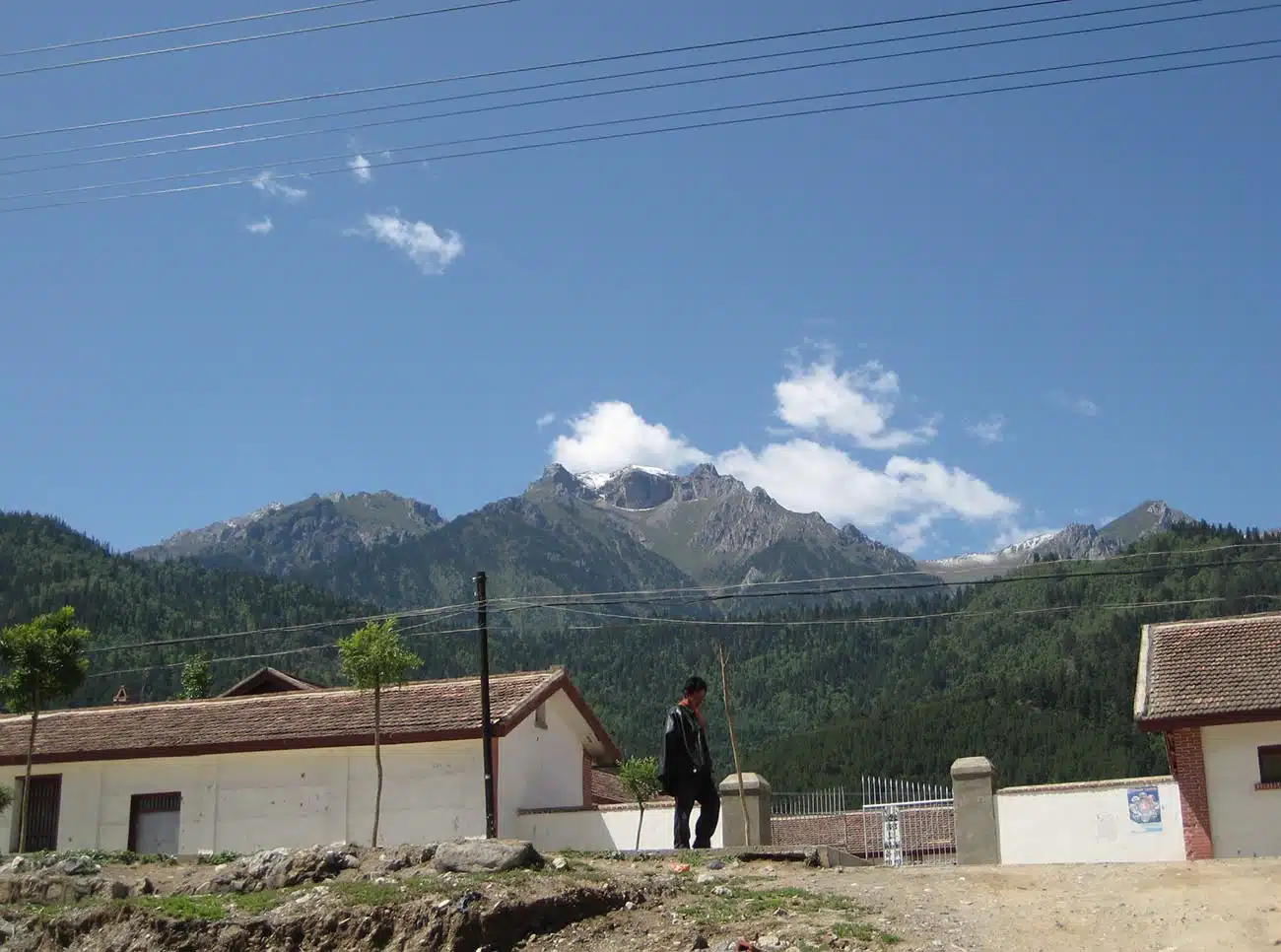
This was the case with my master, Aleur Chorten (Tib. a lags mchod rten), who spent the last twenty years of his life in Diebu (or Tewo, Tibetan: the bo rdzong), in eastern Tibet, in a temple house—the temple not being visible from the outside—which had become a place of pilgrimage and a spiritual center for the local Tibetan population and for all those who had a connection with him. My master’s lineage eventually became known as “the Diebu lineage” and still bears that name today, even though it has now spread to other places, most notably a place called “La Sauveté” in the French Pyrenees.
In the Tibetan world, the master—the living presence of the lineage—”makes” the place, not the other way around.
More Posts

Rare and precious 1
In “Rare and Precious 1”, Paul talks about human life, the precious one for the Tradition, a crossroads for understanding cosmos.

Creative Process
In this article, Damien Brohon talks about the reality (or unreality) of our thoughts, the creative process of the mind, and the difficulty of writing an article for Dzogchen Today! !

Dust
In “Dust”, Paul talks about the reality of all the living beings and one of the most important thought of Dzogchen: impermanence.