
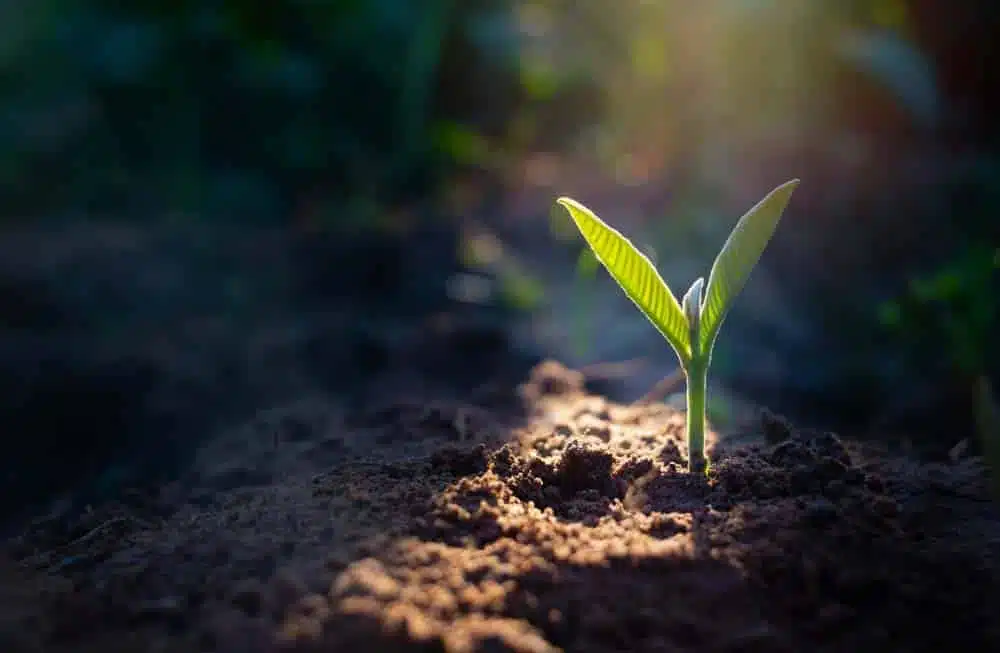
Birth
Birth, like old age, sickness and death, is one of the fundamental reflections that it is important to have at the outset when beginning the practice of Dzogchen.
These are the preliminaries to any other practice, especially the application of meditation.
Why is this so? Because it is essential to know ourselves, to know what we are, before we even ask the question of whowe are. It is also crucial to know what we are “struggling with”: what are our limitations, our sufferings; in short, everything that we want to overcome, purify, transform.
Everything goes back to birth, necessarily.

Written By Mila Khyentse
Blog | Culture and tradition | Reflections on life | The Dzogchen basics
In this article, the first in a series on existence, Mila Khyentse tells us about birth from the Dzogchen point of view.
QUOTE
Without birth there is no Great Perfection… And yet the Great Perfection is beyond birth!
We are born from the union of our parents. Thus, from the very beginning, a link is established between “us” and two other beings who have allowed us to appear in this world. But this link does not stop there: it also conditions our belonging to the human community, to a people, to a family.
This first link, birth, will therefore determine our entire existence and all that we will be and do and, of course, how we will end up.
This cardinal principle of birth is also found in all our experiences: everything appears at a given moment, is maintained by transforming itself during a certain time (this is degeneration) and finally disappears at another, like our thoughts, our sensations, our emotions.
Birth is thus the very basis of our entire experience: we get up in the morning, we are born to a new day and we go to bed at night to die to that same day.
Birth thus conditions our entire existence and even, according to Dzogchen, all our existences. It makes us humans, or animals, or even gods or demigods… according to the tradition which states that birth is the gateway to six specific types of existence (see Paul’s article on this subject) in which we constantly evolve, existence after existence. Whether you believe in it or not, it doesn’t stop you from practicing the Great Perfection anyway!
In Dzogchen and especially Buddhist traditions, this endless cycle is usually seen as the “worst curse”. This is certainly the case, because then we always feel stuck, trapped between birth and death, and wish only one thing: to escape this ephemeral state. On the other hand, we have a terrible fear of disappearing, of dying.
This is the paradox of existence, always torn by the opposites that birth leads to, and it is difficult for us to even think about it.
However, the Dzogchen tradition insists on one point: it is because everything is born that everything can die, and this is precisely the greatest opportunity to discover what we really are, to overcome the paradox of birth. In fact, the Great Perfection insists that our true, original nature is precisely at the basis of birth: everything that emerges, that is born, is the expression of that nature.
If we pay attention to the way in which everything arises in our mind, and if we remain lucid, without judgement or fear, on the path of transformation and disappearance of everything that has arisen, we find ourselves facing our naked reality: our clear, empty and luminous nature beyond birth, degeneration, sickness and death.
Without birth there is no Great Perfection… And yet the Great Perfection is beyond birth!
More Posts
The Story of the First Masters: Jnanasutra
The saga of the early masters of Dzogchen continues with Jñanasutra, who devoted his 500th and final life as a scholar to the practice of the Great Perfection and the attainment of the body of light.

Work as a Basis for Practice
In “Work as a Basis for Practice”, Mila Khyentse talks about working and practicing Dzogchen at the same time in the same place.

Manifestation
In this article, Paul defines manifestation as the play of emptiness of the All-Excellent free from partial grasping.

Crossing the Pass
In “Crossing the Pass”, Maréva explores the symbolism of crossing mountain passes in the Himalayas and in the West, and its connection to the practitioner’s path.
Is the Marmot a Yogi?
In “Is the Marmot a Yogi?”, Damien outlines a definition of what a yogī might be according to the Dzogchen tradition. Series: Summer in the...
Verticality Without a Summit
In “Verticality Without a Summit” Denis refers to the ascent of a mountain as a metaphor for the different paths of Great Perfection.