
Phenomena

Written By Damien Brohon
Blog | Dzogchen Terms
This article “Phenomena” is the second entry in a new category designed to improve understanding of essential Dzogchen words and concepts.
Series: The Dzogchen Terms
Phenomena
The English word “phenomena” (phenomenon) translates several Tibetan terms with complementary connotations. A phenomenon is that which appears to a consciousness (Tib. nang wa/snang ba). Without the mind, there is no phenomenon, because otherwise nothing is known—even the idea of something unknowable by the mind remains a mental phenomenon for the mind. This latter term emcopasses sensory consciousness and mental consciousness: the knowing and known aspects are mutually dependent, as shown by the term “yul tchen”, which literally means ‘possessor of an object’, where an object (yul) is defined as “that which is known by consciousness”. Phenomena are effectively everything that can be experienced through the six consciousnesses. Thus, they constitute the fundamental elements of reality (skt. Dharma, tib. chös) : they hold (Skt. dhar) their own characteristics. Finally, the Dzogchen approach can be described as phenomenological, because it makes phenomena the gateway to their primordial nature (Skt. dharmata, Tib. chönyi/chos nyid), or the “Reality of phenomena”. From this perspective, phenomena are the ornaments (Tib. gyän/rgyan) of sovereign manifestation (Tib. thugdjé/thugs rje). Depending on whether or not they are recognized in their nature, they appear as “pure” (ornaments of compassion) or “impure” (conditioned factors).

More Posts

Crossing the Pass
In “Crossing the Pass”, Maréva explores the symbolism of crossing mountain passes in the Himalayas and in the West, and its connection to the practitioner’s path.
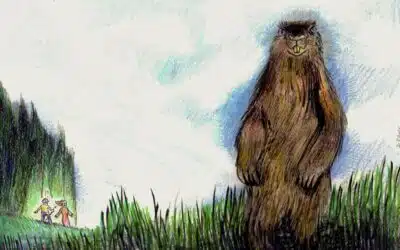
Is the Marmot a Yogi?
In “Is the Marmot a Yogi?”, Damien outlines a definition of what a yogī might be according to the Dzogchen tradition. Series: Summer in the...
Verticality Without a Summit
In “Verticality Without a Summit” Denis refers to the ascent of a mountain as a metaphor for the different paths of Great Perfection.