
The Tibetan Transmission: the Transmission According to the Four Initiations of Vajrayana

Written By Paul Baffier
Blog | Dzogchen philosophy | General Introduction to Dzogchen | The Dzogchen basics
The Tibetan transmission, according to the four initiations of Vajrayana, leads to the complete realization of the ultimate nature of all reality.
Series: The Lineage
The Tibetan Transmission: the Transmission According to the Four Initiations of Vajrayana
It is said that the nature of mind (the tathāgatagarbha, “the essence of the dynamics of suchness”) remains within us, and that searching for it would be like someone who has lost their wallet and is desperately searching in every room of their house for it, when in fact the wallet is in the inside pocket of their jacket, right next to their heart.
(I am adapting the story of the man who sleeps on a treasure without knowing it.
“It is said that the nature of mind (tathāgatagarbha, “the essence of the dynamics of suchness”) remains within us, and that searching for it would be like someone who has lost their wallet and is desperately searching for it in every room of their house, when in fact the wallet is in the inside pocket of their jacket, right next to their heart.”
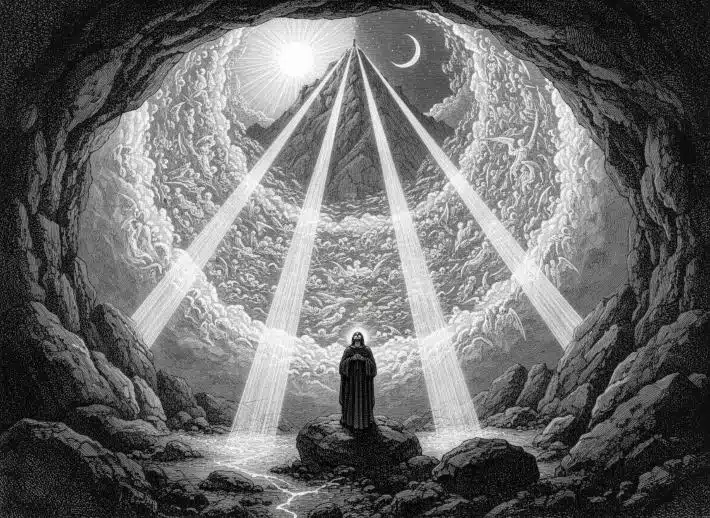
However, since we are slow to understand, the Indo-Tibetan system of the four initiations—or “power transmissions,” a translation that is perhaps more suited to the Sanskrit term abhiṣeka and the Tibetan dbang (“wang”) —allows us to empower (dbang means “power, might, strength”) this presence by gradually actualizing its potential through stages that serve to unveil it by gradually purifying the layers of our obscuration…or our too many jackets.
The qualified Master plays a crucial, unbreakable role in adequately transmitting these four initiations that mature the mind of the seeker. A Master is an expert of this system who has fully realized it.
The four transmissions of power (Skt. caturabhiṣeka, Tib. dbang bzhi) correspond to the successive realization of the four Bodies of the Perfectly Enlightened Ones, through increasingly subtle direct experiences, on the path to deepening the nature of mind. So that “nature of mind” is not an empty word or a distant concept, but rather immediate knowledge, that is, unmediated by our conceptual imagination and our tendency toward abstraction.
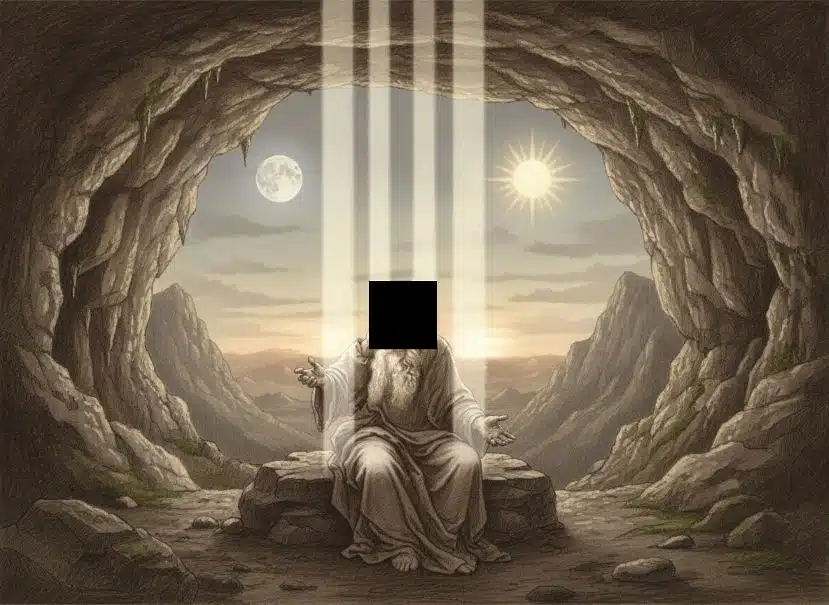
The structure of the four empowerments corresponding to the four Bodies is found, for example, in the Longchen Nyingthik system and comes from the Guhyagarbhatantra, the root tantra, and other Mahāyoga tantras. However, it is also found in the unsurpassable tantras (Skt. anuttarayogatantra, Tib. bla na med pa’i rnal sbyor gyi rgyud) of the new schools:
-
the vase empowerment (Skt. kalaśābhiṣeka, Tib. bum pa’i dbang) empowers the visualization and, enabling the practice of the creation phase, allows one to purify the negative actions of the body and, thus, the subtle channels, that is, to purify the form-support of manifestation and attain the Body of Manifestation (Skt. nirmāṇakāya, Tib. sprul pa’i sku).
-
The secret empowerment (guhyābhiṣeka, gsang ba’i dbang) empowers mantras and purifies speech defects by enabling mastery and refinement of the breath, and thus attainment of the Body of Perfect Fulfillment (Skt. saṃbhogakāya, Tib. longs spyod rdzogs pa’i sku);
-
the empowerment of higher knowledge-primordial knowledge (Skt. prajñājñānābhiṣeka, Tib. shes rab ye shes kyi dbang) purifies the imperfections of the mind and actualizes the practices of bliss-emptiness of the perfection phase (Skt. sampannakrama, Tib. rdzogs rim) via the ability to practice candali, the inner fire, which enables the realization of the Body of Reality (Skt. dharmakāya, Tib. chos kyi sku), undifferentiated from Samantabhadra ;
-
the empowerment of the reality of the word (Tib. tshig don gyi dbang, also called the “fourth empowerment,” Skt. caturthābhiṣeka, Tib. bzhi pa’i dbang) purifies the triad of body, speech, and mind by consuming (‘tshig) the ground*-*of-all consciousness (Skt. ālayavijñāna, Tib. kun gzhi rnam shes) and cognitive obscuration: it is then the realization of the Empty Essence Body (Skt. svabhāvavikakāya, Tib. ngo bo nyid sku) that is made possible, the essence of the Three Bodies, the nature of mind in its pure fullness.
The radical Dzogchen path is more direct. There is no need to remove all your clothes one by one if your jacket has a zipper. Just unzip it.
Bibliography
Jamgön Kongtrul, Esoteric Instructions, The Treasury of Knowledge, (trad. Sarah Harding), Snow Lion, New York, 2007.
Jigmé Lingpa, « Gourou Yoga », Manuel du Longchèn Nyingthig Ngöndro, Rimé Thrinlé Ling, Paris.
Philippe Cornu, « Les spécificités du Mahāyoga par rapport à l’Anuyoga », Droupdra, 4.1, Institut Khyèntsé Wangpo, Paris, 2025.
More Posts

Crossing the Pass
In “Crossing the Pass”, Maréva explores the symbolism of crossing mountain passes in the Himalayas and in the West, and its connection to the practitioner’s path.

Is the Marmot a Yogi?
In “Is the Marmot a Yogi?”, Damien outlines a definition of what a yogī might be according to the Dzogchen tradition. Series: Summer in the...

Verticality Without a Summit
In “Verticality Without a Summit” Denis refers to the ascent of a mountain as a metaphor for the different paths of Great Perfection.